Buying
Desi vs kabuli chana: same plant, two very different grains
Why one becomes chana dal and besan, and the other becomes chole and hummus.
Key takeaways
- Both are chickpea, Cicer arietinum.
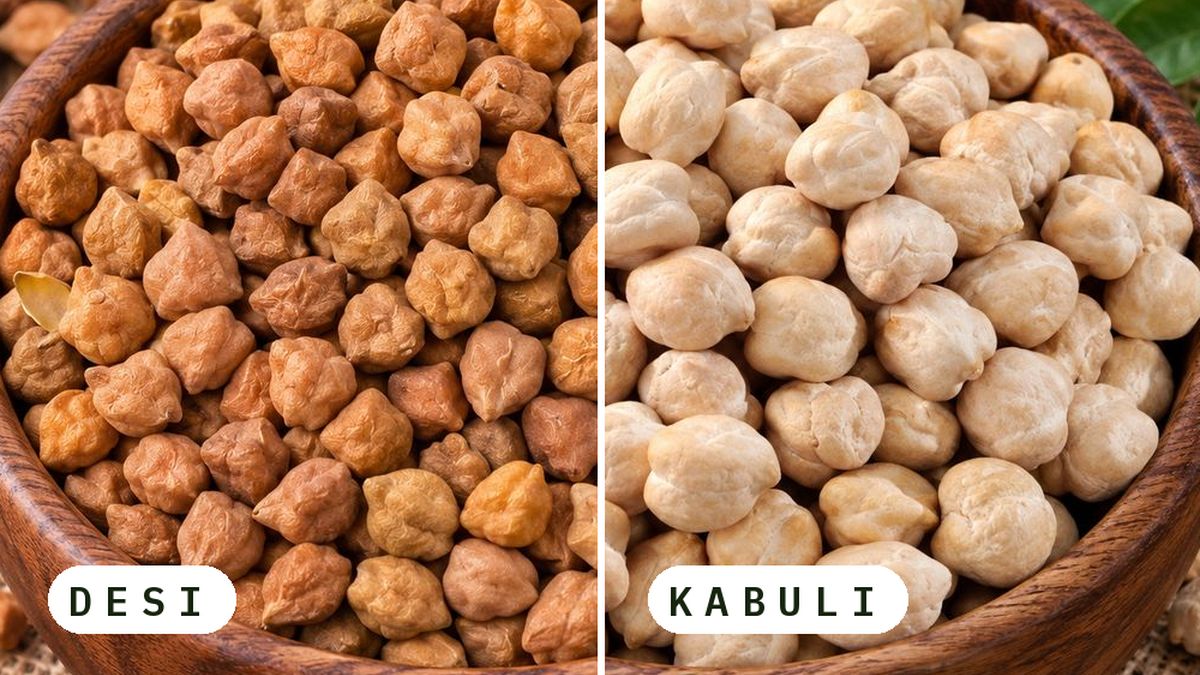
- Desi is small, angular and dark-skinned: it becomes kala chana, chana dal and besan.
- Kabuli is large, round and cream: it is sold by size and used whole.
| Desi chana | Kabuli chana | |
|---|---|---|
| Seed | Small, angular, thick brown-black coat | Large, rounded, thin cream coat |
| Flower | Usually pink-purple | White |
| Becomes | Kala chana, chana dal, besan, roasted chana | Chole, salads, hummus, canned chickpeas |
| Sold by | Grade and colour | Size, in millimetres or count per 100 g |
| Share of India's crop | The large majority | A smaller, premium share |
Kala chana, chana dal, besan: one grain
Kala chana is the whole desi grain with its skin. Remove the skin and split it, and you have chana dal. Grind chana dal, and you have besan.
Why kabuli costs more
Kabuli is a smaller crop, grown for its size, and graded by machine to a tight size band. Large, uniform calibre is scarce, and buyers pay for it.
Quick answers
Both come from desi chana. Kala chana is the whole grain with its dark skin; chana dal is the same grain de-husked and split.
Traditionally no. Besan is milled from chana dal, which is de-husked desi chickpea.
Buying or packing pulses? Tell us the product, quantity and destination and we will come back with a number.