
Insights
Notes from the mill floor.
Prices, policy, quality, compliance and the kitchen. Short, sourced and written from inside a working dal mill.
Market
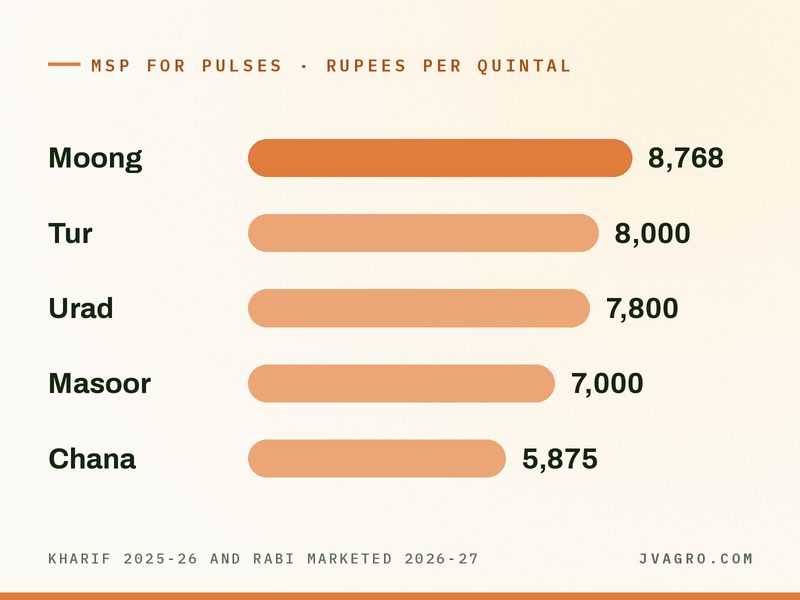
MSP for pulses 2025-26: tur, chana, moong, urad and masoor
The support prices that set the floor under India's pulse market this year, in one table.
2 min read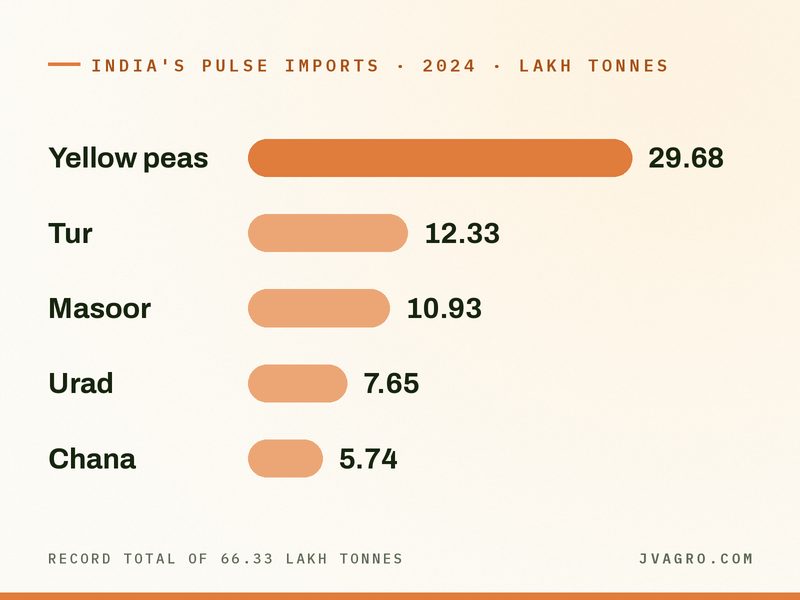
Market
Tur imports stay duty-free until March 2027: what it means for prices
Why one DGFT notification matters to every tur dal rate in the country.
2 min read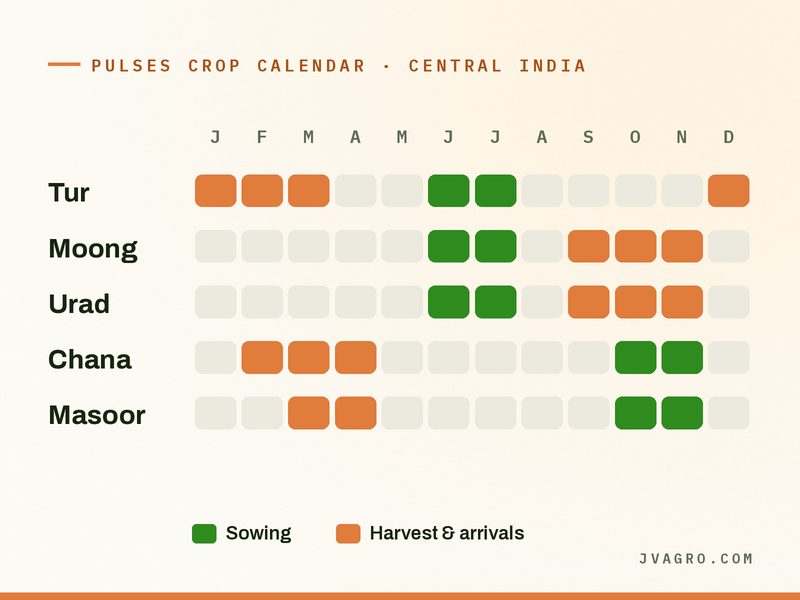
Market
Pulses crop calendar: when tur, chana, moong, urad and masoor arrive
Sowing, harvest and mandi arrival months for India's main pulses, on one chart.
2 min read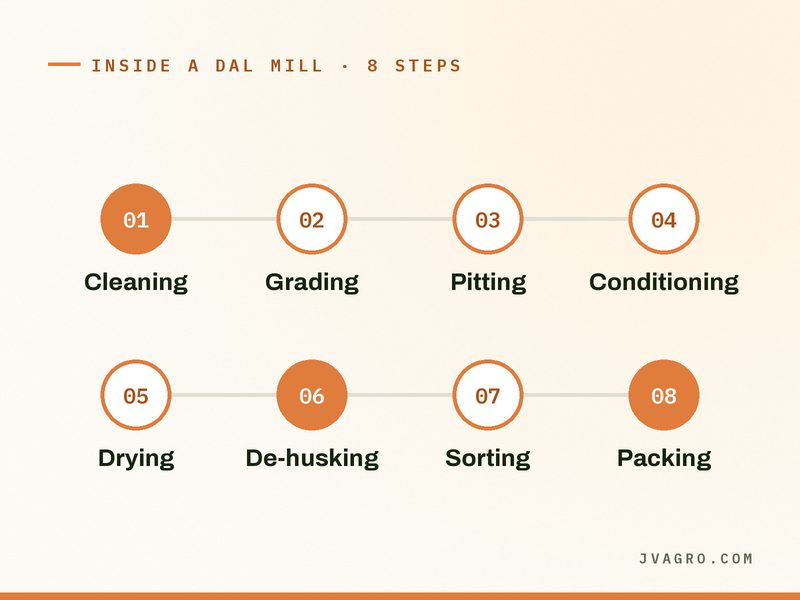
Process
How dal is made: inside a dal mill, step by step
From mandi tur to split yellow dal, in eight steps.
2 min read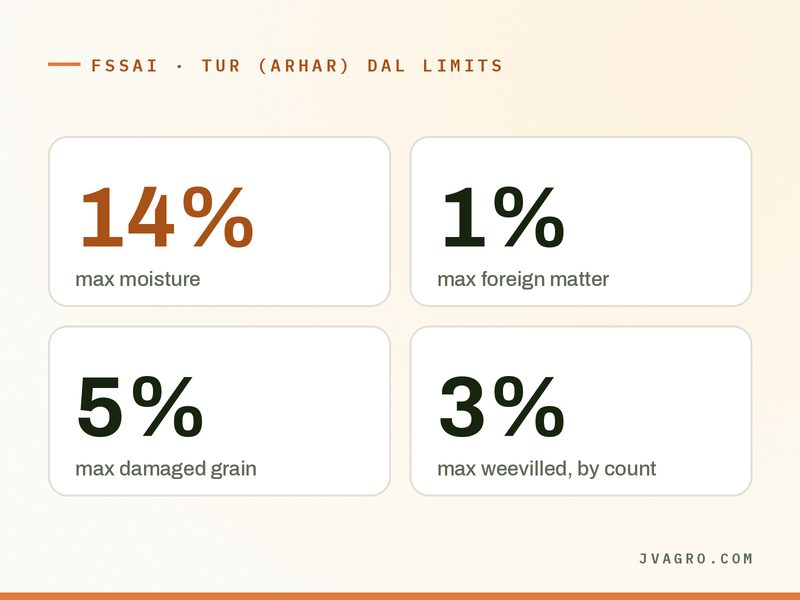
Compliance
FSSAI standards for tur dal, in plain English
The legal limits for moisture, foreign matter and damaged grain, and what they mean when you inspect a lot.
2 min read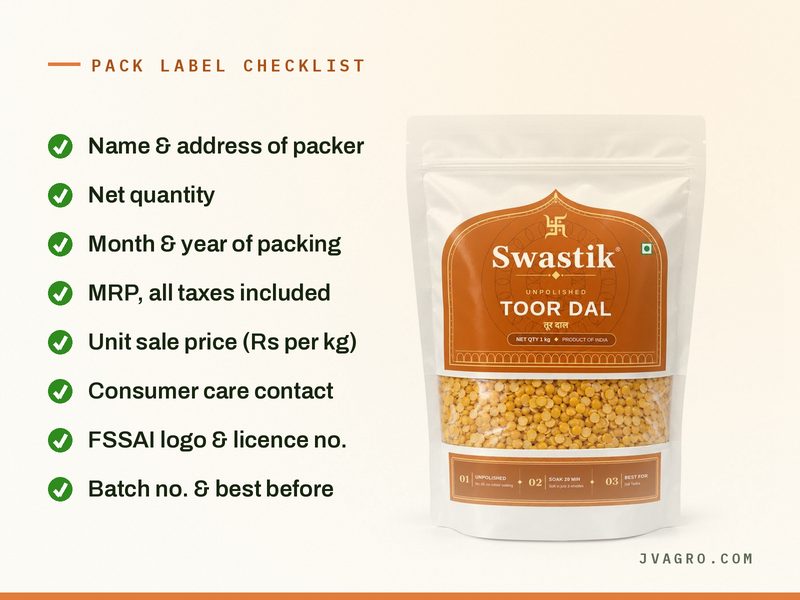
Compliance
What must be printed on a pack of dal: the labelling checklist
FSSAI and Legal Metrology declarations for pre-packed pulses, in one list.
2 min read
Private label
Starting your own dal brand: a seven-step checklist
What you need before your first pack reaches a shelf, and what a mill can do for you.
2 min read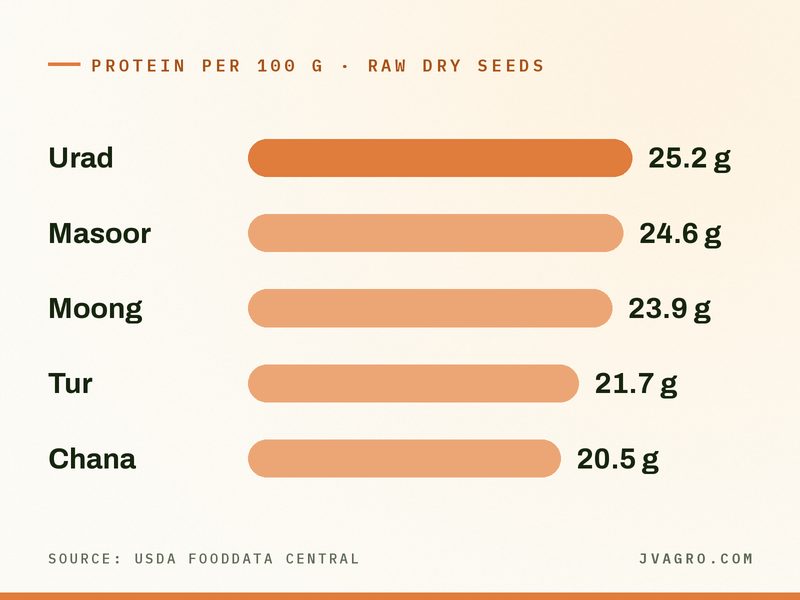
Nutrition
Toor, chana, moong, urad, masoor: protein and fibre compared
Per-100 g numbers for India's five everyday pulses, and why dal with rice works.
2 min read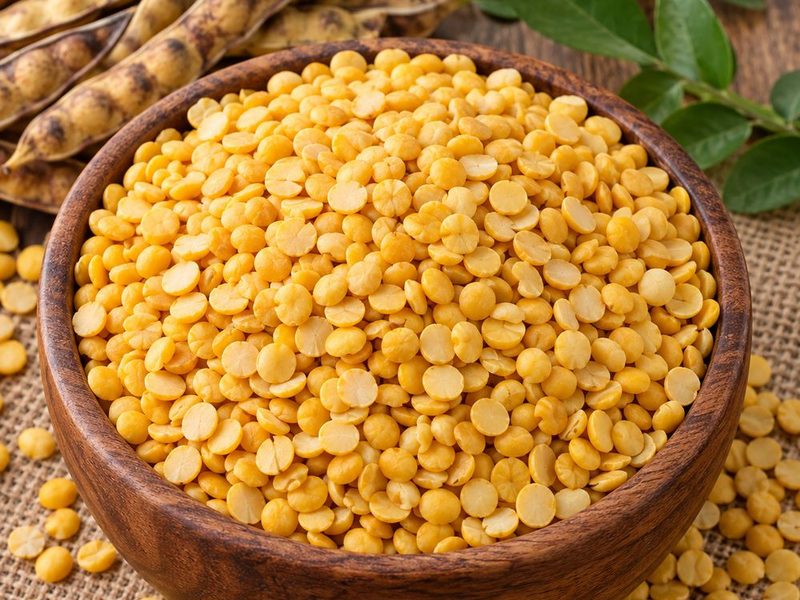
Kitchen
Six Maharashtrian classics made with tur and chana
Varan to puran poli: the dishes that use Vidarbha's two great pulses.
2 min read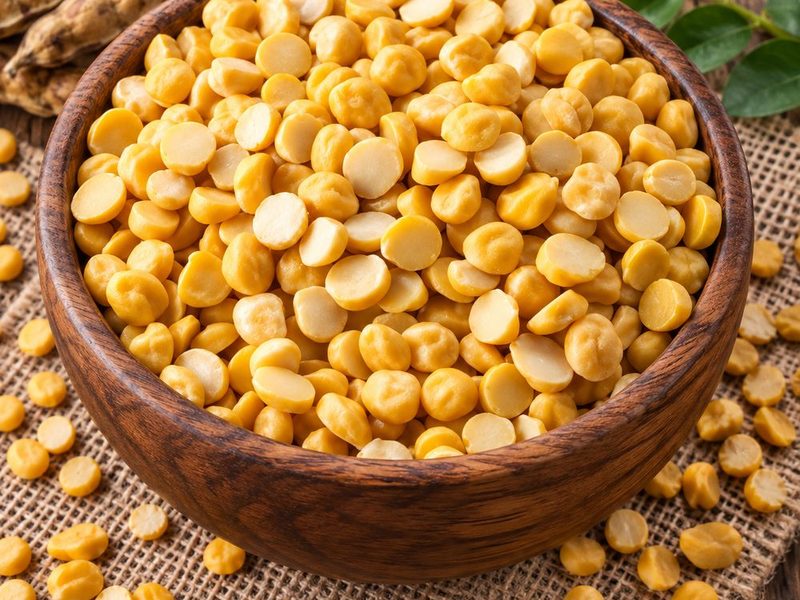
Kitchen
How long to soak and cook every dal: a pressure-cooker guide
Soak times and whistle counts for nine common dals and whole pulses.
2 min read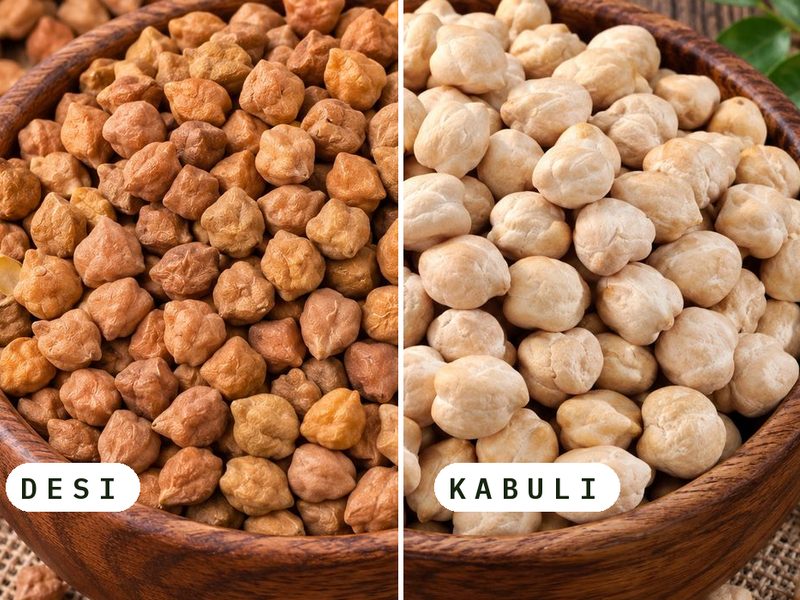
Buying
Desi vs kabuli chana: same plant, two very different grains
Why one becomes chana dal and besan, and the other becomes chole and hummus.
2 min read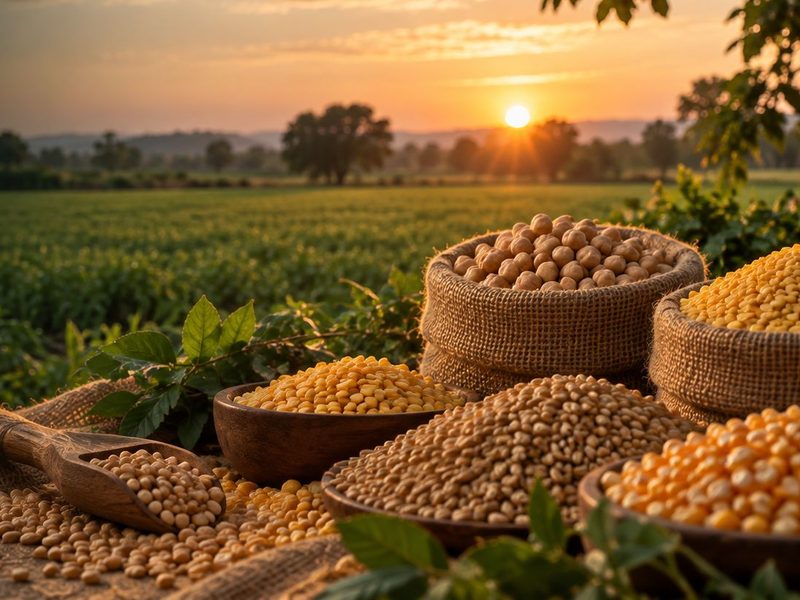
Export
Exporting pulses from India: registrations, codes and documents
The paperwork checklist for a first export shipment of dal or chana.
2 min read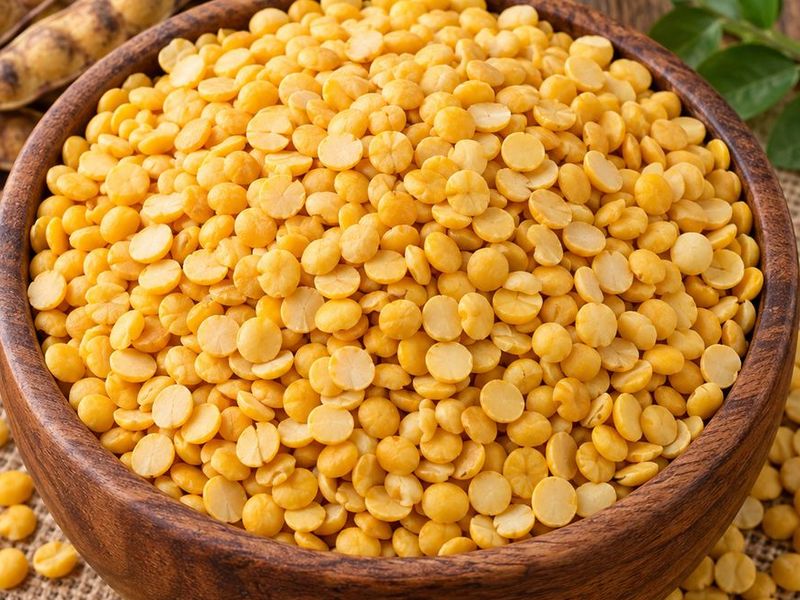
Buying
Polished vs unpolished toor dal: what the shine tells you
Two bags of the same dal can look completely different on a shop shelf. Here is what polishing does, how to spot it, and when it is worth paying for.
5 min read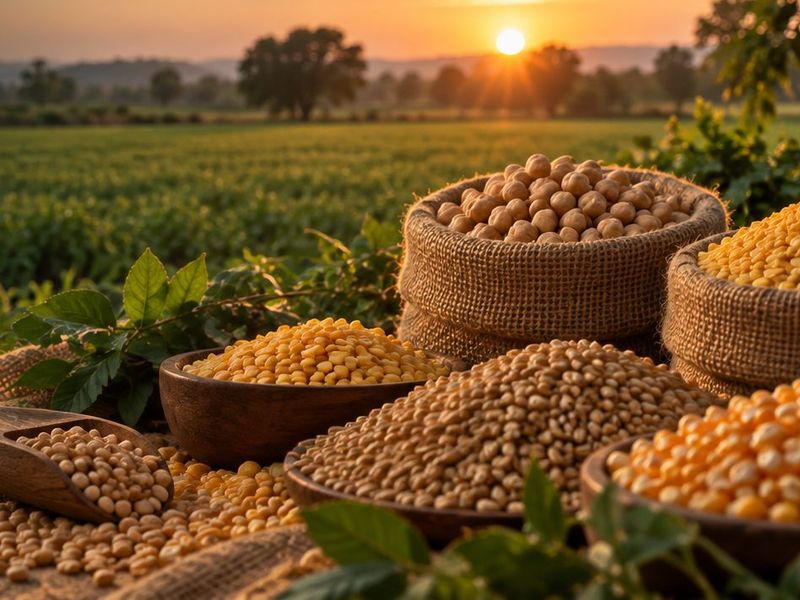
Storage
How to store dal so it keeps its quality
Most dal that goes bad is not bad dal. It is good dal kept in the wrong place. A practical guide for godowns, shops and home kitchens.
6 min read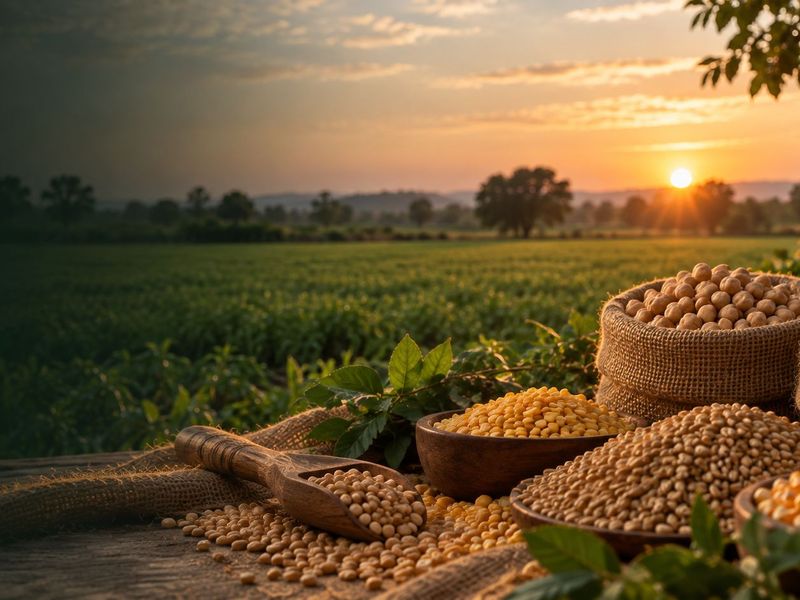
Market
Why toor dal prices move: reading the Vidarbha arrival calendar
Tur is a single-season crop. Once you understand the arrival window, most of the price movement stops looking random.
6 min read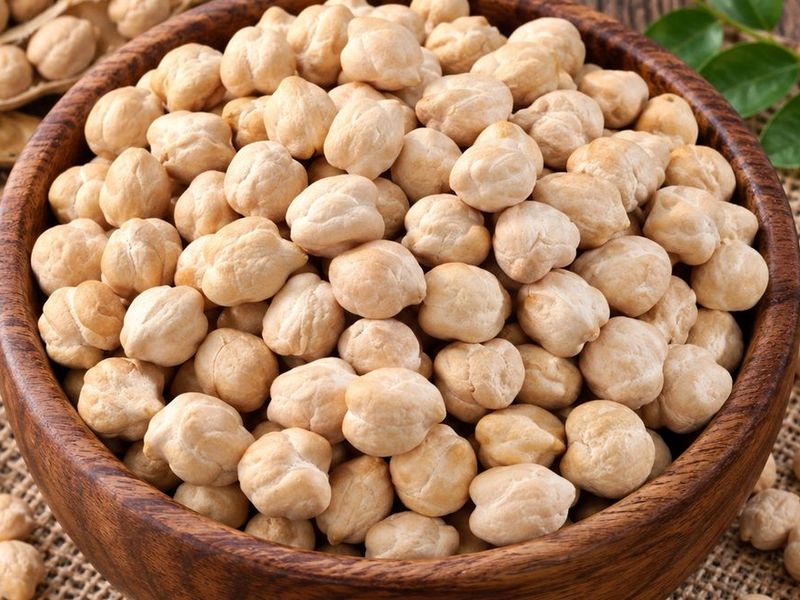
Buying
Kabuli chana sizing: what 8 mm, 9 mm and 10 mm really change
Two containers of kabuli chana can look identical and price twelve percent apart. The difference is almost always calibration.
5 min readTools for the trade
Quick answers, without the phone call.
Free · every working day
Get the rates and every new note on WhatsApp.
Ex-mill rates every working day, plus a short note whenever something moves the pulse market: MSP, import windows, arrivals.
- Ex-mill rates for tur, chana & kabuli
- MSP, import and arrival notes
- Reply STOP any time